An error has occurred, please log back in, ensuring that you have just one window from the website open.
11+ advice – Bond 11+ newsletter
Register for the Bond 11+ newsletter
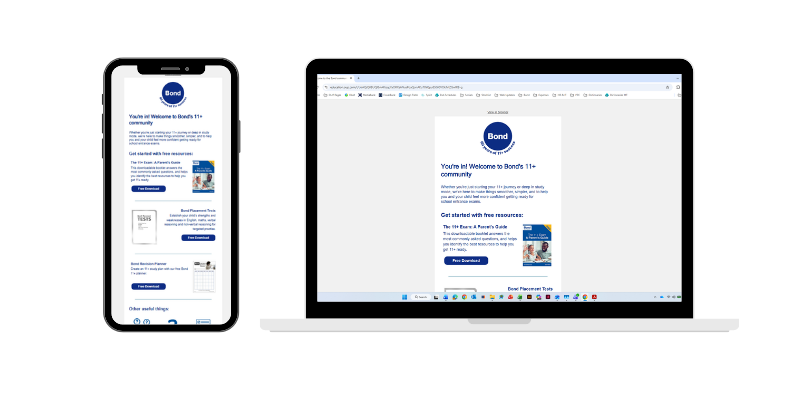
Join thousands of parents and tutors receiving practical advice, exam strategies, and free resources straight to their inbox
Sign up to the Bond 11+ newsletter to:
- Access free practice and resources, expert tips, and exclusive offers
- Get help choosing the right practice book at the right time
- Stay up-to-date with news and be the first to hear about new Bond resources
Trusted by parents and tutors for over 60 years, Bond has supported millions of learners preparing for the 11+ and other school entrance exams with structured curriculum-aligned resources and expert guidance so that you can feel confident in giving your child the best chance at 11+ success.
Find 11 plus books: Which Bond book is right for my child?

With over 160 titles within the Bond range, we’ve put together this short guide to all the different books so that you can find exactly the right resources to support your child:
Revision and exam practice
Preparing for secondary school
To make choosing the right Bond book even easier, we've now developed our Bond Book Selector Quiz. Take the quiz >
Don't forget that you can enjoy great savings across all Bond products when you purchase multiple items on the Bond Online shop, starting with 20% off when you buy 2 or more.
Revision and exam practice
Bond 11+ English Assessment Papers
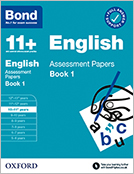
Topic-based practice questions that set the foundation for success in the 11+, Common Entrance or KS2 SATs exams. These carefully-graded practice papers provide essential practice for each question type in a realistic exam style. Ages 5-13+
Now with fully explained answers (for ages 9-11)
Bond 11+ CEM
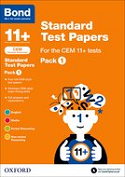
Developed specifically for the CEM 11+ exam, we’ve created a range of materials to help you prepare your child for the CEM 11+ exam, including assessment papers, test papers and learning guides. Ages 8-11+
Bond 11+ Mixed Standard Test Papers
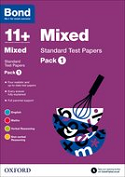
Bond 11+ test paper packs enable realistic mock exam practice at home, matching the style, content and difficulty of the real 11+ examination. Tutor tips for exam success are included, written by leading 11+ tutors and packed with advice to help gain extra marks. Ages 7-11
Bond 11+ Online Child Subscription

Used by thousands of parents and children every year, Bond Online gives your child unlimited access to thousands of 11+ questions and is a fun and engaging way of helping your child prepare for the 11+. Age 9+
Bond 11+ Maths 10 Minute Tests with Answer Support
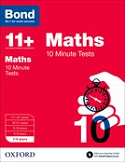
Bite-sized tests for quick practice and revision, including coverage of all the core skills and motivating and fun puzzle selections. Ages 7-12+
Developing key skills
Bond SATs Skills Spelling and Vocabulary Workbooks
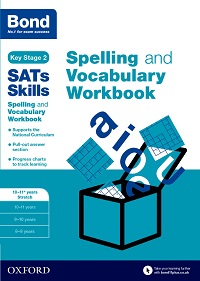
New skills range that focuses on developing essential skills to a high level, Bond SATs Skills Spelling and Vocabulary Workbooks will help your child develop the key skills required for KS2 SATs, 11+ and Common Entrance. Ages 8-11+
Bond 11+ Handbooks
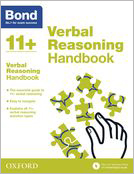
Step-by-step, subject-specific guidance for developing the skills needed for the 11+ and other entrance tests. With clear explanations and comprehensive worked examples of all 11+ question types. Practical support for parents and children aged 8-11+
Bond 11+ No Nonsense Maths
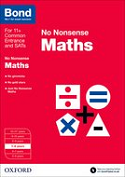
Improving general skills in key subject areas, for children in Key Stages 1 and 2, No Nonsense gives you a clear programme to follow with your child with structured, step-by-step lessons. Ages 5-11+
Focus On
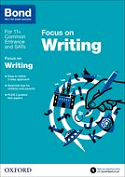
Designed to improve comprehension and writing skills, these practical guides are perfect for preparing children for the written elements of the 11+, Common Entrance and KS2 SATs. Ages 9-11
Bond Brain Training for Kids
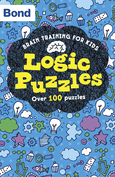
Designed by the Bond team to develop children’s vocabulary, maths, and problem-solving skills. Each book has over 100 puzzles, set at different levels so that your child can choose the challenge that best suits them. It's education by stealth! Ages 8-11
Support for all abilities
Up to Speed
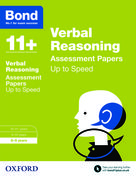
Practice papers for children not yet working at the level needed for exam success. These carefully levelled, skills-focused tests are designed to help children improve their ability to answer 11+ questions, and are accompanied by techniques and advice from 11+ tutors. Ages 8-11+
Stretch
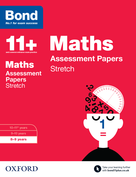
More challenging practice papers to stretch the very brightest children, studying for the 11+ and Common Entrance. Ages 8-11+
Preparing for secondary school
Get Ready for Secondary School
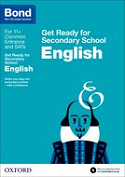
Perfect for helping children prepare for the transition from KS2 to KS3, these guides explain the core English and Maths skills children will need as they move into KS3. Practical activities and practice tests will help your child to develop these skills. Ages 9-11+
Online brand guidelines
Typography
Headings
Lead paragraph
There should only be one lead per page.
Bond has provided the number 1 practice materials for the 11 Plus, selective exams and general practice for over 50 years. The Bond resources have helped literally millions of primary school pupils learn and practise at home, in school and with tutors.
Bond covers all four 11 Plus subjects (English, maths, verbal reasoning and non-verbal reasoning) and provides consistent and continuous learning from first steps at age 5 or 6 through to the exams themselves. It is also invaluable for SATs practice and bridging secondary school entry. A broad approach in Bond's 11 Plus and Common Entrance focused materials enables Bond to accommodate a wide range of different learning styles.
Paragraph's
- Avoid using bold and italics
- Lines of text shouldn't exceed 75 characters as they become harder to read at this point.
- Brand names shouldn't be italicised
- Avoid using inline styles
- Bold paragraphs shouldn't be used as titles
Note the ‘he’. 1964 was long before the days of sexual equality so, when the first book was published, it was felt that it would almost certainly prove more successful if its authorship wasn’t overtly attributed to a woman. Consequently, her name was given as the genderless ‘J.M. Bond’, and the title page said that she was the ‘Principal’ rather than the ‘Head Mistress’ of a school. It was not until 2007 that she was ‘outed’ on the internet as being female!
Moyra Bond was born in Norfolk in 1915. Her first employment was with Barclays Bank and the only indication then of the direction her career would later take was her phenomenal facility for mental arithmetic. She was able to calculate sums in her head much faster and more accurately than people who relied on pen and paper or, in more recent years, a calculator. In those days, her main claim to fame was swimming, in which she competed in county events. In 1938 she married Raymond Bond, who also worked for Barclays, and with whom she had two sons.
In 1946 Moyra Bond moved to Swanage in Dorset where she decided to become a teacher and, after training at Weymouth College, she taught mathematics at a number of local schools. Her husband died in 1956 and, two years later, she raised the money to buy Avalon, a girls’ preparatory school in West Kirby, Cheshire. She soon developed this into one of the most successful schools in the North-west.
Lists
- There shouldn't be more than one highlight list per page
- Lists shouldn't be bold
- Keep lists short and make them easy to scan
Unordered list
- List one
- List two
- List three
Ordered list
- List one
- List two
- List three
Highlight blue list
- List one
- List two
- List three
Highlight grey list
- List one
- List two
- List three
List style none
- List one
- List two
- List three
Hyperlinks
- Don't use the text "click here" or "here" for hyperlinks
- Try not to open up external websites in new windows as this breaks the back button.
- Always add rel="external" to external links
- Hyperlinks shouldn't be bold or italic
A link without surrounding text
Note the ‘he’. 1964 was long before the days of sexual equality so, when the first book was published, it was felt that it would almost certainly prove more successful if its authorship wasn’t overtly attributed to a woman. Consequently, her name was given as the genderless ‘J.M. Bond’, and the title page said that she was the ‘Principal’ rather than the ‘Head Mistress’ of a school. It was not until 2007 that she was ‘outed’ on the internet as being female!
Fonts
Helvetica is the standard font but will fall back to Nimbus Sans and then sans-serif. (Windows will fall back to Nimbus Sans as Helvetica is not a system font.)
Helvetica
Helvetica
Helvetica
Helvetica
Helvetica. Note the ‘he’. 1964 was long before the days of sexual equality so, when the first book was published.
Nimbus Sans
Nimbus Sans
Nimbus Sans
Nimbus Sans
Nimbus Sans. Note the ‘he’. 1964 was long before the days of sexual equality so, when the first book was published.
Layout

Horizontal rules
Standard
Thick
Grey
Blue
Icons
Grey icons
- Help icon
- Video icon
- Info icon
- User icon
- Basket icon
- Question icon
- Close icon
- Tick icon
- Arrow left icon
- Arrow right icon
- Print icon
- Refresh icon
Blue icons
- Help icon
- Video icon
- Info icon
- User icon
- Basket icon
- Question icon
- Close icon
- Tick icon
- Arrow left icon
- Arrow right icon
- Print icon
- Refresh icon
White icons
- Help icon
- Video icon
- Info icon
- User icon
- Basket icon
- Question icon
- Close icon
- Tick icon
- Arrow left icon
- Arrow right icon
- Print icon
- Refresh icon
Colours
Primary colours
- Blue $blue #00529C
- Dark grey $dark-grey #414242
- Grey $grey #DADADA
- Black $black #000000
Secondary colours
- Teal $teal #00A4B9
- Red $red #EE1941
- Green $green #ADBE25
- Yellow $yellow #FDB813
Print colours
- Print $print-standard #4C4D52
- Links $link-color #06C
Buttons
- Only one primary button per page
Login button
LoginAdd to cart button
Primary button
Button primarySecondary button
Button secondarySubmit button
Primary button caret right
Parents' loginPrimary button caret left
Parents' loginSecondary button caret right
Parents' loginSecondary button caret left
Parents' loginExample article
11+ Easter Revision – advice and support
How do you begin with revision and how do you motivate your child? Based on my experience, these points might help:
When to start:
Easter is a great time to begin revision. Once your child has learnt the exam techniques needed, they can move on to timed practice, but at the start I’d just begin revising with technique guides to hand and don’t overly stress about timing. Confidence is crucial at this stage. If there are any weak areas, this is a good time to strengthen them.
A personalised technique book:
I use a technique book with an example of each question type to make sure that each of my pupils understands every question type. Any top tips or examples that help your child remember techniques can be added to the book. For example, in maths a worked long multiplication sum might be helpful and the formula for solving the area of a triangle could be a top tip. In verbal reasoning, the code questions might be useful and listing the squared and cubed numbers could be another top tip. Getting your child to write these key ideas out is a great way of revising and encouraging them to be part of their own learning process.
Personalising the technique book also makes everything just that bit more memorable. Choosing an appealing notebook and some stars, stickers and highlighter pens can make the process rewarding. Some children copy out a technique and highlight the title while others go to town with colour co-ordinated glitter pens.
How to plan:
What you need before creating your revision plan:
- The exam dates for the 11+ exam or exams
- Which subjects will be in the exam
- Any assessment papers, test papers or relevant school books that your child has been working on
- The personalised technique book
Now you know where you are aiming for and where your child is up to at present, it can be easier to work out what needs to be covered. Breaking this down into tiny chunks makes it accessible. This is a good time to recap weak areas, consolidate strengths and prepare for the higher level books and test papers.
Motivation:
I think it’s really important that children think about their own reasons for wanting to go to a specific school. I’ve found that listening and writing down children’s reasons for wanting a specific school can really help to keep them motivated. If milkshakes at lunchtime or a certain school uniform is a reason for them, this all goes on the list.
Here are other methods that work for me:
- Motivational aids such as ‘well done’ messages, stickers or stars when a child has completed work shows that every paper deserves recognition.
- Encouraging work to be completed early so that a child can ‘earn’ a week off can help children who struggle with monotony, but others find it easier to maintain a habit. Here, knowledge of your child is everything.
- At the risk of sounding obvious, frequently telling a child how proud you are of them and giving specific reasons why can be really powerful. Whilst scoring highly in practice tests is great, praising their inner determination rewards the child, not just their work.
Feel free to adapt anything here to make it work for your child and have a great Easter.
Michellejoy Hughes
Content block
Content block

Interactive question bank – perfect for GL & CEM 11+ exams. Buy a monthly subscription from £5.99 per month*.
I use a technique book with an example of each question type to make sure that each of my pupils understands every question type. Any top tips or examples that help your child remember techniques can be added to the book. For example, in maths a worked long multiplication sum might be helpful and the formula for solving the area of a triangle could be a top tip. In verbal reasoning, the code questions might be useful and listing the squared and cubed numbers could be another top tip. Getting your child to write these key ideas out is a great way of revising and encouraging them to be part of their own learning process.
Content block sub-header
In 1946 Moyra Bond moved to Swanage in Dorset where she decided to become a teacher and, after training at Weymouth College, she taught mathematics at a number of local schools. Her husband died in 1956 and, two years later, she raised the money to buy Avalon, a girls’ preparatory school in West Kirby, Cheshire. She soon developed this into one of the most successful schools in the North-west.
Adverts


Interactive resource for 11+ success
- Unlimited Practice
- Covers all key question types
- Builds exam skills and motivates your child
- Targets weak areas and boosts scores
Register for free advice and support
Signing up to the Bond website means you'll have access to:
- Hundreds of free resources
- Free advice and support in monthly newsletters
- Latest 11+ news