11+ Verbal Reasoning exam │ Bond 11+

Find out more about the 11+ verbal reasoning exam and how Bond 11+ verbal reasoning resources can support your child on their path to exam success.
11+ verbal reasoning exam overview
11+ Verbal Reasoning exam overview
Verbal reasoning tests assess children’s problem solving skills when working at speed, and also test how effectively they can process information.
Verbal reasoning is not part of the National Curriculum in state primary schools, and this style of assessment may feel quite strange for children who have not seen questions framed in this way before. This is why practising these kinds of questions at home is so important: it helps familiarise children with a style of testing that they won’t experience at school.
The scope and content of an 11+ verbal reasoning exam differs from region to region as there are a wide range of question types that can be included. However, the tests will usually require children to:
- Process verbal information
- Apply logical thinking and problem-solving skills
- Find and follow patterns and rules
- Determine word meaning
- Spell accurately
- Apply basic maths skills
- Work systematically
There are two different formats for 11+ verbal reasoning exam papers:
- Standard format – where children write their answers on the test paper
- Multiple-choice format – where answers are marked in a separate answer booklet
11+ verbal reasoning exam papers are timed and usually last between 45-60 minutes. Children should practise with timed 11+ mock test papers, as well as working through non-timed practice, so they can see what they are able to do within a given time frame.
Bond 11+ Verbal Reasoning resources
Bond is the number 1 provider of 11+ practice materials, helping millions of children pass selective entrance exams. Offering a comprehensive learning programme for the 11+, we have a wide range of resources to support you and your child for all 11+ exams:
Bond Assessment Papers for 11+
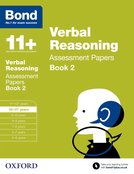
Topic-based practice questions that set the foundation for success in the 11+, Common Entrance or KS2 SATs exams. These carefully-graded practice papers provide essential practice for each question type in a realistic exam style. Ages 5-13+ Buy now
Bond CEM Standard Test Papers 11+
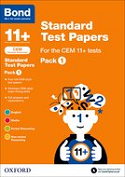
Developed specifically for the CEM 11+ exam, Bond 11+ resources have a wide range of materials to help you prepare your child for the CEM 11+ exam, including assessment papers, test papers and learning guides. Ages 8-11+Buy now
Bond Test Papers
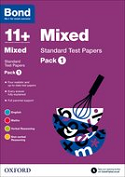
Bond 11+ test paper packs enable realistic mock exam practice at home, matching the style, content and difficulty of the real 11+ examination. Ages 7-11Buy now
Bond 10 Minute Tests
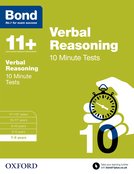
Bite-sized tests for quick practice and revision, including coverage of all the core skills and motivating and fun puzzle selections. Ages 7-12+Buy now
How to Do 11+

Step-by-step, subject-specific guidance for tackling key areas for the 11+ and other entrance tests. Includes parent tips and practical activities you can do with children to improve understanding. Age 7-11+Buy now
Bond Online

Used by thousands of parents and children every year, Bond Online gives your child unlimited access to thousands of 11+ questions and is a fun and engaging way of helping your child prepare for the 11+. Age 9+Buy now
The Parents' Guide to the 11+
The essential manual for all parents whose children are about to embark on their 11+ exam journey. Written by an experienced 11+ tutor, this guide offers a practical 4-step approach to guide you through the entire process. Buy now
Tips for parents
Verbal reasoning is not taught as part of the National Curriculum in state schools so it’s important to practise these kinds of questions at home. This will build your child’s confidence and help familiarise them with a style of testing that they won’t experience at school.
Here are some ideas for you to try at home in order to help your child prepare for their verbal reasoning 11+ exam.
How to help your child prepare for the 11+ in Year Four
Check up on basic skills during the summer term and use the summer holidays to develop logical thinking and problem solving skills.
- Play word games such as Scrabble® and complete crosswords to improve your child’s word knowledge
- Play dictionary games and encourage your child to create anagrams to improve their word sorting skills and test their knowledge of the alphabet
- Use logic puzzle books and complete numerical problems such as Sudoku to test verbal and numerical logic
How to help your child prepare for the 11+ in Year Five"
This is the time to start regular 11+ revision and practice. Support your child by:
- Establishing a regular weekly routine for practice – little and often is usually best
- Playing word games to further develop their knowledge of vocabulary and synonyms, as well as their logical thinking skills. Suggest a word to your child and ask them to find a word that is opposite then similar to it, or a game where you suggest a pair of words and your child tried to find the common link.
Free resources
Make the most of our free 11+ verbal reasoning resources:
- Download our free 11+ verbal reasoning assessment paper
- Sign up to the Bond website and download more free 11+ resources, including activity sheets and assessment papers
11 Plus Non-verbal Reasoning and Spatial Awareness exam │ Bond 11+

Find out more about the 11+ non-verbal reasoning and spatial awareness exam and how Bond 11+ non-verbal reasoning resources can support your child on their path to exam success.
11+ non-verbal reasoning and spatial awareness exam overview
Bond 11+ non-verbal reasoning and spatial awareness resources
11+ Non-verbal Reasoning/Spatial Awareness exam overview
11+ non-verbal reasoning/spatial awareness is often used as a neutral way of testing aptitude levels in children. It does not require any prior knowledge and can be used to determine a candidate's potential to think logically and recognise patterns.
Why is practising these sort of questions so important for your child:
Non-verbal reasoning/spatial awareness is not part of the National Curriculum in state primary schools, and this style of assessment may feel quite strange for children who have not seen questions framed in this way before. This is why practising these kinds of questions at home is so important: it helps familiarise children with a style of testing that they won’t experience at school.
Do the questions in the non-verbal exam differ from each Local Authority (LA)?
The scope and content of an 11+ non-verbal reasoning/spatial awareness exam differs from region to region as there are a wide range of question types that can be included. In addition, it is important to establish if non-verbal reasoning/spatial awareness is tested by the Local Authority (LA) that administers the 11+ in your area, as not every LA tests this subject.
What does the non-verbal reasoning 11 + exam involve
If non-verbal reasoning/spatial awareness is one of the subjects your child will be tested on as part of the 11+ exam, the non-verbal reasoning/spatial awareness exam will usually require children to:
- Process graphic or pictorial information
- Apply logical thinking and problem-solving skills
- Use spatial awareness – how objects relate to each other in space
- Find and follow patterns and rules
- Apply maths skills – rotation, reflection and symmetry
- Work systematically
There are two different formats for 11+ non-verbal reasoning/spatial awareness exam papers:
- Standard format – where children write their answers on the test paper
- Multiple-choice format – where answers are marked in a separate answer booklet
11+ non-verbal reasoning/spatial awareness exam papers are timed and usually last between 45-60 minutes. Children should practise with timed 11+ mock test papers, as well as working through non-timed practice, so they can see what they are able to do within a given time frame.
Bond 11+ Non-verbal Reasoning/Spatial Awareness resources
Bond 11+ is the number 1 provider of 11+ exam books, helping millions of children pass selective entrance exams. Offering a comprehensive learning programme for the 11+ books, we have a wide range of resources to support you and your child:
Bond Assessment Papers

Topic-based practice questions that set the foundation for success in the 11+, Common Entrance or KS2 SATs exams. These carefully-graded practice papers provide essential practice for each question type in a realistic exam style. Ages 5-13+ Buy now
Bond CEM 11+
Developed specifically for the CEM 11+ exam, we’ve created a range of materials to help you prepare your child for the CEM 11+ exam, including assessment papers, test papers and learning guides. Ages 8-11+ Buy now
Bond Test Papers
Bond 11+ test paper packs enable realistic mock exam practice at home, matching the style, content and difficulty of the real 11+ examination. Tutor tips for exam success are included, written by leading 11+ tutors and packed with advice to help gain extra marks. Ages 7-11 Buy now
Bond 10 Minute Tests
Bite-sized tests for quick practice and revision, including coverage of all the core skills and motivating and fun puzzle selections. Ages 7-12+ Buy now
How to Do 11+

Step-by-step, subject-specific guidance for tackling key areas for the 11+ and other entrance tests. Includes parent tips and practical activities you can do with children to improve understanding. Age 7-11+ Buy now
Bond Online
Used by thousands of parents and children every year, Bond Online gives your child unlimited access to thousands of 11+ questions and is a fun and engaging way of helping your child prepare for the 11+. Age 9+ Buy now
The Parents' Guide to the 11+
The essential manual for all parents whose children are about to embark on their 11+ exam journey. Written by an experienced 11+ tutor, this guide offers a practical 4-step approach to guide you through the entire process. Buy now
Tips for parents
Non-verbal reasoning/spatial awareness
This is not taught as part of the National Curriculum in state schools so it’s important to practise these kinds of questions at home. This will build your child’s confidence and help familiarise them with a style of testing that they won’t experience at school.
Here are some ideas for you to try at home in order to help your child prepare for their non-verbal reasoning/spatial awareness 11+ exam.
What to work on when your child is in Year 4
Check up on basic skills during the summer term and use the summer holidays to develop logical thinking and problem solving skills:
- Use tile shape patterns and jigsaw puzzles, either real or online, to help your child recognise patterns and shapes
- Play spot the difference games to reinforce their visual understanding
What to work on when your child is in Year 5
This is the time to start regular 11+ revision and practice. Support your child by:
- Establishing a regular weekly routine for practice – little and often is usually best
- Ensuring they work through some test papers to get used to both the question types and the exam timings
Free resources
Make the most of our free 11+ non-verbal reasoning/spatial awareness resources:
- Download our free 11+ non-verbal reasoning/spatial awareness assessment paper
- Sign up to the Bond website and download more free 11+ resources, including activity sheets and assessment papers
What is the CEM 11+ exam?
Originally created by Durham University, the CEM 11+ exam has become more popular with grammar schools who fear that the existing 11+ exam system had become too transparent. The CEM exam has been designed to address concerns over question spotting and ‘teaching to the test’.
To tackle these issues the CEM 11+ differs from the GL 11+ exam, with a very different exam format and a perceived increase in the level of difficulty.
For more detailed information about the CEM 11+ exam, read our blog ‘11+ exam boards: CEM vs GL – what’s the difference?’.
How long does it take to study for CEM?
GL and CEM are the two main exam boards for the 11+ and although they cover broadly the same topics – English, maths, verbal and non-verbal reasoning/spatial awareness – there are very real differences to the way the GL and CEM 11+ exams work, which will have an impact on how you support your child.
To help you prepare your child for the 11+ exam, we’ve summarised the key differences between GL and CEM.
Which subjects are covered?
- GL: English, maths, verbal reasoning, and non-verbal reasoning/spatial awareness (schools can choose any combination of these to best suit their selection policy).
- CEM: verbal reasoning, non-verbal reasoning, and numerical reasoning (‘verbal reasoning’ encompasses many of the skills tested in the GL English exam, including comprehension and ‘numerical reasoning’ involves the core maths skills needed for the GL exam).
Which skills will be tested?
Your child will require strong skills in the following areas:
- GL: vocabulary, logic, maths, and spelling
- CEM: English, comprehension, vocabulary, spelling, and maths. CEM verbal reasoning is very different to GL and success is dependent on children having a wide-ranging vocabulary.
Why is CEM different?
The CEM 11+ exam is favoured by some regions and schools as it is seen as more ‘tutor-proof’ than GL. CEM places more emphasis on:
- not producing or endorsing any published practice papers
- basing the test papers more closely on the National Curriculum, which is followed by all state school children
- a perceived increase in difficulty
- it is an online-only test
If your child is sitting a GL Assessment-examined test, use plenty of past and practice papers to familiarise your child with the question types in each subject.
If your child is sitting a CEM-examined test, work hard on developing a deep and rich vocabulary:
- Use a vocabulary book to record new words and their meanings to ensure that your child really understands the new words they are learning and can use them in context.
- Read widely with your child and use ‘grown up’ words in ordinary conversation, explaining their meaning as you go.
- Practise synonyms and antonyms, for example, encourage your child to use more sophisticated words to describe something, or complete crosswords together.
- Plenty of exam prep using practice papers is also important for CEM, but the question types that appear in the real CEM 11+ exam are much more unpredictable.
For both tests, but especially the CEM-examined tests, time management skills are of great importance:
- Make sure your child does plenty of timed practice and is accustomed to managing their time carefully.
- Use practice test papers to set mock tests under exam conditions to help them get used to formal exam conditions – getting used to working in test conditions will help your child feel less intimidated by the real exam.
What is a good score on the CEM test?
The 11+ exam is highly regionalised: the subjects covered in the 11+ papers and how your child will be tested will depend on where you live.
There are two main exam boards for the 11+ exam:
- GL Assessment – previously known as NFER, GL Assessment develop and administer 11+ exams in the majority of grammar schools in the UK.
- CEM – developed by the Centre for Evaluation & Monitoring at Durham University, the CEM 11+ exam was created in response to fears from some grammar schools that the existing 11+ exam system had become too predictable. The CEM exam was designed to address concerns over question spotting and ‘teaching to the test’. As of 2022, the CEM test is now exclusively taken online.
For example, the Kent grammar schools use a variation of the GL exam known as the Kent Test. This is made up of a multiple-choice paper of English and maths questions, a paper of verbal reasoning and non-verbal reasoning/spatial awareness, and a 40-minute writing test. This last exam is only marked when looking at borderline candidates or appeals. Some schools in Kent have additional tests which can either be taken in place of the Kent Test or as a supplement to it.
There can be significant differences between the exams depending on where your child is taking the 11+. This makes it extremely important to check with your Local Authority and local grammar schools so that you know exactly what subjects and skills your child will be tested on as part of their 11+ exam. Some schools are part of consortiums, and their application system may differ from that outlined by the Local Authority. Therefore, it is important to check with the schools directly. Additionally, schools don’t necessarily use all the papers provided by an exam board: they may choose to just test on a couple of topics as opposed to all four.
Checklist – to find out how the 11+ exam is structured in your area, check the following details with your chosen school:
- When is the 11+ exam?
- Which subjects are tested?
- How many questions will there be in the 11+ paper?
- What format does the exam take?
- Who provides the exam?
Currently the GL and CEM exams are taken in the following regions:
GL ASSESSMENT: Barnet, Birmingham, Bournemouth, Christchurch and Poole, Buckinghamshire, Calderdale, Enfield, Gloucestershire, Lincolnshire, Medway, North Yorkshire, Plymouth, Slough, Warwickshire, Wiltshire.
CEM: Bexley, Devon, Kirklees, Redbridge, Telford and Wrekin, Walsall, Wolverhampton.
GL ASSESSMENT AND CEM: Lancashire, Torbay, Trafford.
GL AND SCHOOL'S OWN TEST: Bromley, Reading, Wirral, Kent.
SCHOOL'S OWN TEST: Cumbria, Essex, Kingston upon Thames, Liverpool, Southend-on-Sea, Stoke-on-Trent, Sutton.
N.B. Please note, this information was correct at time of publication, but schools do change exam board so it is essential that you check with each school to which you are applying.
Are CEM tests hard?
Practice is the best way to develop skills and improve scores – the key is to start at a manageable level and build up from there. Whilst a challenge can be invigorating, attempting questions that are too hard for your child can have a negative impact on their results and their confidence. If in doubt, start with materials that you know they are comfortable with and then gradually increase the difficulty.
All Bond books include guidance on how to get the best results and on which books to try next, depending on the scores your child is achieving. For ages 9-10 and 10-11+, Bond assessment practice also includes Up to Speed titles for children needing additional support to get up to the level required for exam success and Challenge papers for those who are working at the required level but are looking for an extra challenge or those who are applying for the most competitive schools.
With a subscription to one of our online products, parents and guardians get access to detailed reports showing how their child has been performing across topics, allowing them to pinpoint areas for improvement.
Bond Handbooks are packed with essential explanations and guidance, as well as ideas on how to improve scores and tutor exam tips.
Each pack of Bond 11+ Test Papers also includes ‘The secrets of 11+ success’ booklet.
The Free Resources section of this website also includes the Bond Placement Tests which will help you to establish your child’s strengths and weaknesses across the core subject areas. The Free Resources section also features activities, further guidance, additional practice material, and walkthrough videos.
How Bond can help you prepare for the CEM 11+ exam:
Our range of CEM online test practice materials and exam papers are designed to help support you throughout your 11+ journey, from taking your first steps into assessing your child’s abilities, all the way through to conducting realistic mock exams at home. All aspects of the 11+ are here, including maths, non-verbal reasoning, English and verbal reasoning.
11+ exam practice: Assessment and standard test papers
Bond CEM Assessment Papers – assess and target
- Carefully graded practice papers to assess your child's strengths and weaknesses.
- Provides the widest range of question types for 11+ English and Verbal Reasoning practice in a realistic exam style.
- Practical tips from expert authors and a 'next steps' planner help improve exam skills. Buy now
Bond CEM Test Papers – develop key exam skills
- Mock test papers simulate the 11+ exam, enabling children to develop the key exam skills of: following instructions, reading the question carefully and time management.
- Covers all question types your children will experience in the real exam.
- Clear explanations for each answer help improve exam skills.
- Tips for exam success, written by leading 11+ tutors and packed with advice to help gain extra marks. Buy now
To find out more, download our free sample CEM practice test.
Supportive learning resources: How to do… guides and the Parents’ Guide
Bond How to do… guides – learn and understand
- Packed with worked examples for each question type so that you can understand how questions should be answered.
- Effective step-by-step strategies and techniques for tackling each type of 11+ Maths and Non-verbal Reasoning questions.
- Practical activities you can do with your child to improve understanding. Buy now
Bond Parents’ Guide – understand the 11+
- The essential manual for all parents whose children are about to embark on their 11+ journey with a new section on the CEM exam.
- Contains unique placement tests, personal learning plans and practical advice
- Written by an experienced 11+ tutor, it offers a practical 4-step approach to guide you through the entire process. Buy now
Engaging Online Revision: Bond Online
Used by thousands of parents and children every year, Bond Online is a fun and engaging way of helping your child prepare for the 11+:
- Unlimited access to thousands of 11+ practice questions.
- CEM-specific tests that will help your child prepare for their actual exams.
- Instant marking and feedback for children and parents.
- Progress reports on each subject and topic. Buy now
Bond 11+ Practice Papers
The number one for exam success, Bond’s best-selling range of 11+ practice papers offer a comprehensive and progressive solution for 11+ success.
Developed by expert authors, each Bond 11+ practice paper is created with the exam in mind. Progressively building the skills for each of the 11+ subjects: English, maths, verbal reasoning and non-verbal reasoning, and for the Durham University CEM (Centre for Evaluation and Monitoring) examination.
Before you start your child’s 11+ practice we recommend the Bond Parents’ Guide to the 11+. This will help you build a picture of your child’s ability to help them to work towards success with the simple four step action plan, including how to assess your child.
Bond’s 11+ practice papers include:
Bond Assessment Papers are topic-based practice questions for the 11+ exam.
Bond Stretch Practice provides more challenging questions to stretch the very brightest minds.
Bond Up to Speed Practice provides practice for children who are not yet working at the level needed for 11+ success.
Bond 10 Minute Tests are bite-sized practice papers, ideal for revision and consolidation.
Bond 11+ Test Papers (Standard) provide realistic 11+ timed test papers, with answers, in standard format.
Bond 11+ Test Papers Multiple Choice provide realistic 11+ timed test papers, with answers, in multiple-choice format.
Bond How to Do… 11+ Guides offer practical step-by-step guidance for children and their parents for each 11+ question type.
Bond Parents’ Guide to the 11+ is the essential guide for parents whose children are sitting the 11+, providing a four-step action plan.
Bond No Nonsense books provide general skills practice for Key Stage 1 and Key Stage 2, matched to the National Curriculum, in maths and English.
Bond Focus on are workbook style tutorial guides for improving the key skills required for exam success.
Bond Puzzles are fun and enjoyable puzzles to reinforce the core logic skills to support exam practice.
Bond Get Ready for Secondary School contain full explanations and progressive practice of the key areas of maths and English to help with the transition from Key Stage 2 to Key Stage 3.
Bond CEM-Style Test Papers provide realistic practice of comprehension, maths, verbal reasoning and non-verbal reasoning to prepare children for the challenging Durham University's CEM (Centre for Evaluation and Monitoring) 11+ exam.
Bond CEM Assessment Papers are CEM-focused papers, containing varied question types in a realistic exam style.
Bond CEM How to Do… Guides provide full explanations with worked examples for each CEM question type, covering each key topic with expert advice.
Bond Online 11+ Practice
Bond’s 11+ courses include Bond Online, an interactive solution to 11+ practice for 9 to 11 year-olds.
Each subscription includes unlimited 11+ online practice for English, maths, verbal reasoning and non-verbal reasoning, including Durham University’s CEM (Centre for Evaluation and Monitoring) question type practice. Subjects are broken down into topics, allowing children to focus on practising the exact areas they need to work on.
Delivered via a parent and a child login, you are able to monitor your child’s 11+ progress with parent reports to pin-point those areas that need extra help, while giving your child the ability to manage their own practice.
Questions are automatically marked providing instant feedback with full answer explanations. Children are able to combine focused practice or subject-level question practice with mock tests to give them the best chance of 11+ success.
Available as monthly* and annual subscriptions, you can be sure of the same quality and rigour as you find in our best-selling Bond books.