11+ Frequently Asked Questions
Find answers to questions about the 11+, including grammar school and independent school admissions, 11+ entrance exams preparation, exam boards, and Bond practice resources.
Note: If you are looking for support with using Bond Online Premium or Bond Online Premium Plus, please visit the Century Tech website at https://help.century.tech/support/home.
To help you get the most out of Bond Online and the Bond 11+ website, we’ve created a Bond customer support site to help you answer any questions you might have.
The 11+ exam
What is the 11+ exam?
The 11+ is a selective entrance examination used by grammar schools and some independent schools to assess a child's academic potential for entry into Year 7. The content and format vary between schools and regions.
What age do children take the 11+?
Most children take the 11+ during Year 6, typically when they are 10 or 11 years old. Application and testing dates vary depending on the school and local area.
Which subjects are included in the 11+?
Most 11+ assessments test a combination of:
- English
- Maths
- Verbal Reasoning
- Non-verbal Reasoning
Schools may assess all four subjects or select a combination that aligns with their admissions criteria.
How long is the 11+ exam?
Individual papers usually last between 45 and 60 minutes, although this can vary depending on the school and exam provider. Many schools require children to complete more than one paper.
What are the main 11+ exam boards?
GL Assessment
GL Assessment is currently the most widely used provider for grammar school entrance tests. Schools can choose from English, Maths, Verbal Reasoning and Non-verbal Reasoning papers depending on their requirements.
Cambridge Select Insight (formerly CEM)
Cambridge Select Insight is a digital entrance assessment used by some selective independent schools. Parents may still hear it referred to as CEM, as the assessment was previously known as CEM Select and before that the CEM 11+.
ISEB
The Independent Schools Examination Board (ISEB) provides assessments including the Common Pre-Tests, which is widely used by independent schools. The assessment covers English, Maths, Verbal Reasoning and Non-verbal Reasoning.
School-Specific Tests
Some independent and grammar schools design their own entrance assessments or combine materials from multiple providers.
Is the 11+ the same across the UK?
No. There is no single national 11+ exam. Different schools and regions use different assessment providers, formats and subject combinations.
Is the 11+ available online?
Some schools use paper-based exams, while others use computer-based assessments. The format depends on the exam provider and the individual school's admissions process.
Is the 11+ compulsory?
No. The 11+ is optional and is only taken by children applying to schools that require an entrance assessment as part of their admissions process.
Your child and the 11+
How do I know if my child is suited to the 11+?
Every child develops differently. School performance, reading ability, curiosity, resilience and enjoyment of problem solving can all be useful indicators, but practice assessments can provide a more objective measure of readiness. The Bond Placement Tests can be used to assess your child's strengths and areas where improvement is needed.
My child is doing well at school. Does that mean they will pass the 11+?
Strong school performance is a positive sign, but the 11+ also assesses reasoning, problem solving and exam technique, which may not be regularly tested in school.
My child works slowly. Is that a problem?
Speed is important because most 11+ papers are highly time pressured. However, speed can usually be improved through regular timed practice and increasing familiarity with question types. Bond's 10 Minute Tests can be used to build confidence with timed conditions.
My child makes careless mistakes. How can I help?
Encourage checking strategies, careful reading of instructions, and regular review of errors. Understanding why mistakes happen is often as important as learning new content.
My child was not born in the UK. Will that affect their performance?
Children who are new to English-language testing may need additional support with vocabulary, comprehension and cultural references. Regular reading is one of the most effective ways to build confidence. You can discover recommended reads for children preparing for the 11+ exam here.
What happens if my child does not pass the 11+?
A child not receiving a selective-school place does not reflect their future academic potential. There are many excellent secondary school pathways available, and some schools offer later entry opportunities.
Preparing for the 11+ exam
How should children prepare for the 11+?
Successful preparation involves more than simply practising questions.
Parents should focus on:
- Building strong English and Maths foundations
- Developing reasoning skills
- Completing regular timed practice
- Improving vocabulary
- Taking mock tests under exam conditions
- Building confidence gradually
Children benefit most from consistent preparation over time rather than last-minute intensive study.
When should 11+ preparation begin?
The ideal starting point depends on your child's confidence and ability. Most families prefer to build skills gradually rather than relying on intensive preparation shortly before the exam, and the majority start preparing in Year 4 or Year 5. Some families start as early as Year 1, and some will start as late as the summer before Year 6.
How much 11+ preparation should my child do?
Consistency is more important than volume. Short, regular sessions are usually more effective than occasional long sessions.
How important is vocabulary?
Vocabulary plays a significant role in many 11+ assessments, especially verbal reasoning and comprehension. Regular reading remains one of the best forms of preparation. Bond's 11+ Vocabulary Flashcards and Flashcard Games are an excellent way to build vocabulary skills.
How can I motivate my child?
Set achievable goals, celebrate progress and keep preparation manageable. Confidence and consistency are often more valuable than intensive study. You can find expert tips for keeping your child motivated in this blog post.
Should my child complete timed practice?
Yes. Timed practice helps children develop speed, confidence and familiarity with exam conditions.
Can my child pass the 11+ without a tutor?
Yes. Many children prepare successfully through a structured study plan, high-quality resources, regular practice and parental support.
Are 11+ past papers available?
Some exam providers and schools offer familiarisation materials, although many selective schools do not publish their actual examination papers. Bond's Test Papers and online mock tests can be used as an alternative to past papers.
The 11+ Subjects
How can I help my child improve in English?
Encourage daily reading, discuss texts together and practise comprehension, vocabulary, spelling and creative writing regularly. You can find more information and English practice resources here.
How can I help my child improve in Maths?
Focus on arithmetic fluency, reasoning, problem solving and confidence with applying mathematical knowledge under timed conditions. You can find more information and maths practice resources here.
What is Verbal Reasoning?
Verbal Reasoning assesses how children work with language, vocabulary, logic and patterns in words. You can find more information and verbal reasoning practice resources here.
How can I help my child improve in Verbal Reasoning?
The most effective ways to improve Verbal Reasoning include reading regularly, building vocabulary, practising synonyms and antonyms, completing verbal reasoning exercises, solving word puzzles and crosswords, and discussing unfamiliar words and their meanings. Regular exposure to language is often just as important as completing practice questions.
What is Non-verbal Reasoning?
Non-verbal Reasoning assesses visual problem solving, spatial awareness and pattern recognition using shapes and diagrams rather than language. You can find more information and non-verbal reasoning practice resources here.
How can I help my child improve in Non-verbal Reasoning?
Children can improve by practising visual reasoning questions regularly, learning to identify common patterns, working with shape transformations, developing spatial awareness skills. The more exposure children have to common question styles, the quicker they become at recognising patterns.
Bond 11+ Resources
Which Bond resources should I choose?
The best resources depend on your child's age, ability and target schools. Consider starting with skills development before progressing to tests. Visit our Guidance page for more information on the different Bond resources.
Who has written the questions for Bond Resources?
The questions have all been written by experienced tutors and teachers. Since J.M. Bond wrote the original books, we have built a select team of trusted authors, all of whom have a proven, high success rate.
Are Bond books suitable for different exam boards?
Bond materials focus on core skills that are transferable across most 11+ assessments, regardless of provider. They are suitable preparation for all exam boards including GL Assessment and the Kent Test. We also have a specific range of resources for the Cambridge Select Insight exam (formerly CEM) and our Bond Online Premium Plus subscription offers practice content specifically for the ISEB exam.
Are online resources better than books?
Both methods offer benefits. Books provide structured practice, while online learning can offer adaptive feedback, analytics and timed assessments. Many families choose to use a mix of both.
Do I need every Bond resource?
No. Most families achieve better results by selecting resources that address their child's specific needs rather than using every available product.
Can Bond 11+ resources help with SATs preparation?
Yes. Bond's English and Maths materials are aligned to National Curriculum objectives and can support wider academic development beyond the 11+. Bond also has a range of SATs Workbooks.
Do you have resources for younger children?
Yes. Early skills development can help children build confidence and core academic foundations before formal 11+ preparation begins. Our 11+ Assessment Practice and No Nonsense books are available from age 5 upwards.
11+ Interviews
Will my child have an interview?
Some independent schools include interviews as part of their admissions process, while many grammar schools do not. You should check with the school you are applying to for their specific requirements.
How should my child prepare for an interview?
Preparation should focus on confidence, communication skills and discussing interests, achievements, and school life naturally.
Bond Online, Premium and Premium Plus
If you are looking for support with using Bond Online Premium or Bond Online Premium Plus, please visit the Century Tech website at https://help.century.tech/support/home
Why do you offer three different versions of Bond Online?
Every child learns differently, so we offer three versions of Bond Online to suit different preparation needs.
Bond Online on this website is ideal for focused practice. It includes interactive questions, instant marking and feedback, and progress reporting.
Bond Online Premium and Bond Online Premium Plus, developed with Century Tech, combine Bond's trusted 11+ content with AI-powered personalised learning pathways and additional learning resources.
Bond Online Premium Plus also includes Common Pre-Tests practice and is the only ISEB-endorsed preparation platform.
Find out more about the different Bond Online options here.
Should I subscribe to all Bond Online versions to give my child the best chance of success?
No. All three versions of Bond Online use the same trusted Bond 11+ practice questions, so there's no need to subscribe to multiple products. Choose the subscription that best matches your child's learning needs and your preferred level of support.
I have a subscription to Bond Online and I want to upgrade to Bond Online Premium or Premium Plus – how do I do that?
OUP’s Bond Online sits on a different platform to Century’s Bond Online Premium/Bond Online Premium Plus. If you want to change from one to the other you will have to cancel your existing subscription and then create a new subscription on the other platform. It is not possible to transfer your details or your child’s progress records between platforms.
Still Have Questions?
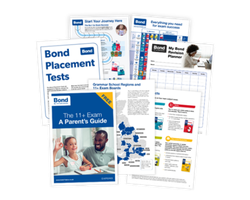
Try our free 11+ Starter Pack for parents.
- Created by 11+ experts with years of experience preparing pupils for school entrance exams
- Covers everything from understanding entrance exams to planning first steps
- Helps you make informed decisions about your child's preparation, such as choosing the best practice resources for their level
- Free and easy to access